COLORADO SPRINGS / PUEBLO → ALAMOSA / SELF-GUIDED BRANCH
Take your own road through San Luis Valley & Sangre de Cristo.
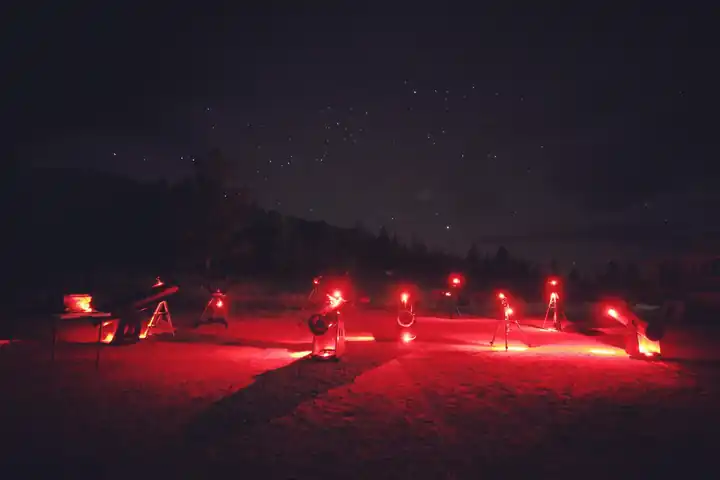
Start from Colorado Springs / Pueblo if that is your natural launch, then let Alamosa take over once you are in the region. Compare darkness, roads, camping, facilities and telescope setup before choosing the night.
Shared gateway stops
How this region overlaps ↗Pick a place deeper in the region
Want someone to guide the night? Switch branches ↗Browns Canyon National Monument
Arkansas River canyon country where the official trail highlights Ruby Mountain and Hecla Junction for dark-sky viewing.
OPEN STOP ↗OFFICIAL TRAIL / International Dark Sky CommunityCrestone
A San Luis Valley Dark Sky Community with local star parties, an annual dark-sky festival and community-led night-sky protection.
OPEN STOP ↗GUIDE ADDITION / Dark-sky gateway to named Forest Service campgroundsCuchara Gateway / Bear & Blue Lakes
Cuchara is the gateway, not the observing pin. The useful night-sky bases are Bear Lake and Blue Lake campgrounds west of town, where legal overnight camping can support stargazing when seasonal roads and campground access are open.
OPEN STOP ↗OFFICIAL TRAIL / International Dark Sky ParkGreat Sand Dunes National Park and Preserve
An International Dark Sky Park where the official trail and NPS both emphasize the dunefield, moonlight, dark-sky viewing and seasonal evening programs.
OPEN STOP ↗GUIDE ADDITION / Public observatorySmokey Jack Observatory
A volunteer-run observatory in Bluff Park with 2026 reserved star parties, public star parties, electronic-assisted viewing and solar observing.
OPEN STOP ↗GUIDE ADDITION / Dedicated astronomy observing siteStarry Meadows / Rocky Mountain Star Stare
A 35-acre dedicated dark-sky observing property outside Gardner used for Rocky Mountain Star Stare and overnight telescope observing.
OPEN STOP ↗GUIDE ADDITION / Roadside sky-watching attractionUFO Watchtower
A San Luis Valley observation platform and campground built around watching the open sky, with a 10-foot viewing tower and on-site camping.
OPEN STOP ↗GUIDE ADDITION / Hot springs + astronomy experienceValley View Hot Springs
Orient Land Trust combines Valley View Hot Springs with a dedicated astronomy-host program and a 20-inch telescope under the San Luis Valley sky. The entire property is clothing-optional.
OPEN STOP ↗OFFICIAL TRAIL / International Dark Sky CommunityWestcliffe & Silver Cliff
Two high-elevation International Dark Sky Communities with public observing, Smokey Jack Observatory and a scale-model Planet Walk.
OPEN STOP ↗Let the road connect a few nights
All routes ↗Before the engine starts
Open the field manual ↗Look at the Moon
A dark new-Moon night and a moonlit mountain night are different experiences. Pick the one you want.
CHECK THE MOON ↗FIELD MANUALRead the horizon
Darkness is only one variable. Access, headlights, wind and an open horizon can matter just as much.
CHOOSE A SITE ↗FIELD MANUALPack the car
Colorado gets cold quickly after dark, especially at elevation. Bring the night you want to stay out for.
PACK THE NIGHT ↗