Trip planning / UPDATED 2026-08-18
Can You Actually Be Here After Dark?
A dark-looking place is not automatically a legal midnight observing site. Check the exact land manager, facility and hours before building a night around it.
FIELD MANUAL / USE THE NIGHT
Start with the map key and field notes, use the quick labels that appear on every stop page, or jump into longer guides for the Moon, Milky Way, telescopes, meteor showers, photography and the rest of the sky.
PRACTICAL GUIDE / GUIDE DESK
The map explains how the trail is organized. The field notes show what it is actually like as the trail gets worked through firsthand.
STOP FILE KEY / QUICK ANSWERS
The same labels appear everywhere so you can compare two places without learning a new language each time.
Bortle 1 is dark. Bortle 9 is bright. See what changes in between.
ACCESSAfter-dark accessCan you actually be there at midnight, or does the gate decide the night?
CAMPCampingPaid, free, dispersed, restricted, or no camping at all.
ROADRoad + vehiclePassenger car, high clearance, 4WD, or a road that changes with the season.
FACILITIESToilets after darkA restroom on the daytime map does not mean it is open at midnight.
SIGNALCell serviceKnow when to download the map before the bars disappear.
SCOPETelescope setupDarkness helps. Level ground, low wind and no headlights help too.
PROGRAMGuided or self-guidedChoose someone to show you the sky, or enough space to explore it yourself.
BEST USEWhat is this place best for?Milky Way, cameras, telescopes, meteors, moonlight or a guided night.
FIELD MANUAL / GO DEEPER
Use these when you want to understand what you are seeing, choose better conditions or bring the right gear.
Trip planning / UPDATED 2026-08-18
A dark-looking place is not automatically a legal midnight observing site. Check the exact land manager, facility and hours before building a night around it.
Observing skills / UPDATED 2026-08-18
Begin with a camera, stable tripod and wide view of the sky. Learn focus and exposure on nightscapes before adding trackers, telescopes and long-focal-length imaging.
Guided options / UPDATED 2026-08-18
AstroTours.org offers mobile private telescope programs across Colorado, but the group still needs a suitable legal venue and any permission required for a commercial program.
Gear / UPDATED 2026-08-18
Binoculars are one of the easiest ways into astronomy: wide-field, portable and useful for the Moon, clusters, the Milky Way and learning where objects sit before moving to a telescope.
Trip planning / UPDATED 2026-08-18
Camping can turn midnight into the middle of the night instead of the start of a long drive, but overnight permission and stargazing access are separate questions.
Trip planning / UPDATED 2026-08-18
Treat cell coverage as a convenience, not the safety plan. Download directions and access information before leaving service and carry what you need if the phone stops working.
Trip planning / UPDATED 2026-08-18
Choose the experience first: Milky Way, Moon, meteors, telescope observing, photography or a guided night. Then choose the place that supports it.
Trip planning / UPDATED 2026-08-18
Pack for the night you will actually have: cold after sunset, darkness, limited service, changing weather and enough comfort to stay outside while your eyes adapt.
Trip planning / UPDATED 2026-08-18
A guided astronomy program and a dark place solve different problems. Choose a guide for interpretation and ready-to-use equipment; choose self-guided for time, flexibility and your own observing plan.
Trip planning / UPDATED 2026-08-18
The darkest pin on a map is not automatically the best night. Compare legal access, horizon, direct lights, weather, roads, Moon and the thing you actually came to see.
Observing skills / UPDATED 2026-08-18
Learn a few bright patterns first, orient the chart to the real horizon and use those anchors to move through the sky instead of trying to memorize every star at once.
Observing skills / UPDATED 2026-08-18
Protect the darkness you came to see: reduce direct artificial light, give your eyes time to adapt and use the dimmest practical red light for routine nighttime tasks.
Observing skills / UPDATED 2026-08-18
Meteor showers are a wide-sky, naked-eye experience. Find a dark open view, get comfortable, give the night time and keep the telescope out of the way.
Trip planning / UPDATED 2026-08-18
Darkness alone is not enough for the Milky Way. Time the Moon, season and darkness, then choose a legal site with a useful horizon and enough time for your eyes to adapt.
Observing skills / UPDATED 2026-08-18
The Moon changes the night rather than simply ruining it. Use darker Moon hours for faint targets and brighter phases for lunar detail and moonlit landscapes.
Trip planning / UPDATED 2026-08-18
A restroom on a daytime map is not proof that it is open during a midnight observing session. Check the exact facility and season before relying on it.
Trip planning / UPDATED 2026-08-18
The approach road is part of the observing site. Check current surface, seasonal closures and the return drive before choosing a dark location.
Night sky by month / UPDATED 2026-08-18
The Perseid peak and New Moon have passed, but August still offers the summer Milky Way, bright Venus after sunset, lingering Perseids and a deep partial lunar eclipse on August 27–28.
Night sky by month / UPDATED 2026-08-18
September keeps the Summer Triangle and late-season Milky Way in the early evening while autumn patterns rise later, with a strong dark-Moon window and International Observe the Moon Night on September 19.
Gear / UPDATED 2026-08-18
Choose a first telescope around what you will actually carry, set up and use. Prioritize stable mounting, useful aperture and portability over extreme magnification claims.
Observing skills / UPDATED 2026-08-18
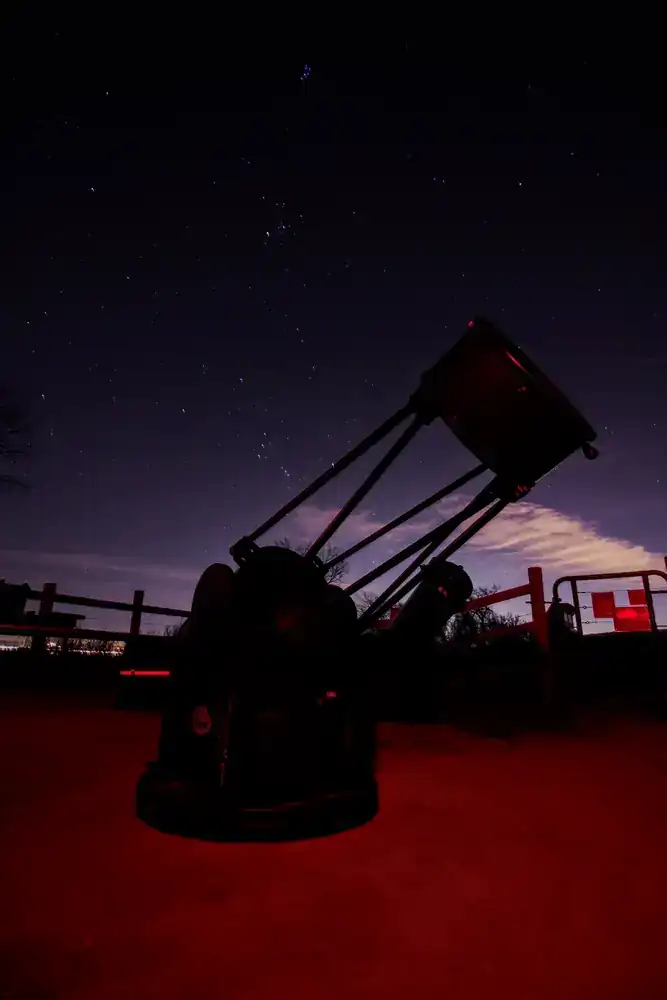
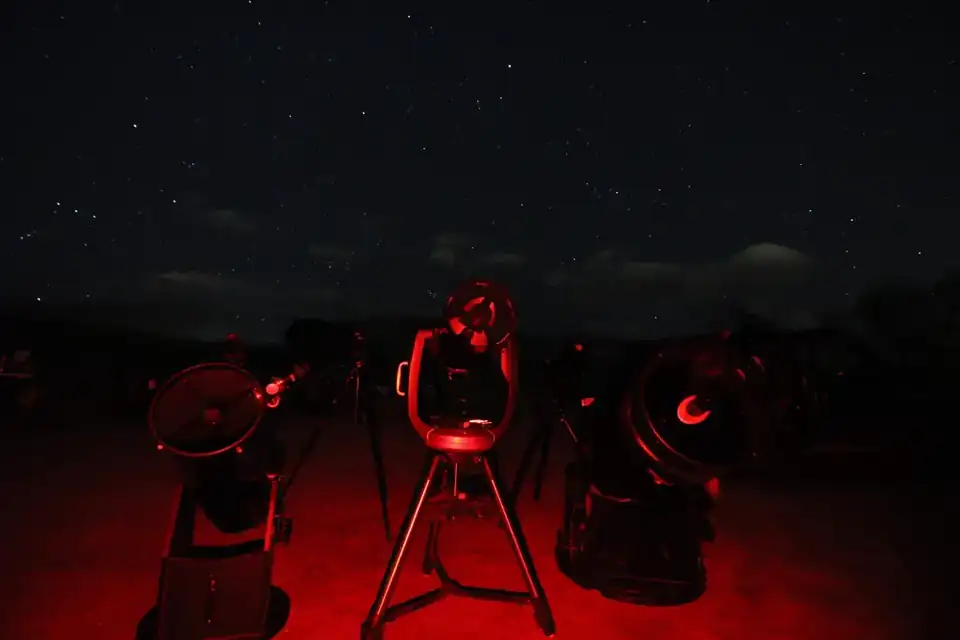
Dark sky is only half the setup. A telescope also needs legal access, stable ground, enough working room, low direct light and conditions that will not shake the instrument all night.
Observing skills / UPDATED 2026-08-18
Match the target to the instrument. Your eyes, binoculars, telescope and camera each show a different version of the night sky, and none should be expected to look like a processed observatory image.
Trip planning / UPDATED 2026-08-18
Winter brings long nights and bright constellations, but the best observing site is the one with confirmed road access, enough insulation and equipment that will still work in the cold.
NIGHT RIDE / NEXT EXITS
Take a turn you have not tried yet. Follow the road into a new place, a new kind of night or something worth knowing before the next stop.
Pick the landscape before you pick the stop.
TAKE THIS BRANCH ↗EXIT 02 / GUIDEDRanger nights, observatories, star parties and guided telescopes.
TAKE THIS BRANCH ↗EXIT 03 / OFFICIAL 21Jump straight to the 21 parks and communities at the center of the route.
TAKE THIS BRANCH ↗EXIT 04 / ROAD BOOKString a few good nights together without trying to drive the whole state.
TAKE THIS BRANCH ↗COSMIC ROULETTE / RANDOM GUIDE SIGNAL
Click once and the guide will race through the places on the statewide map, lock onto one at random, then open that place page.