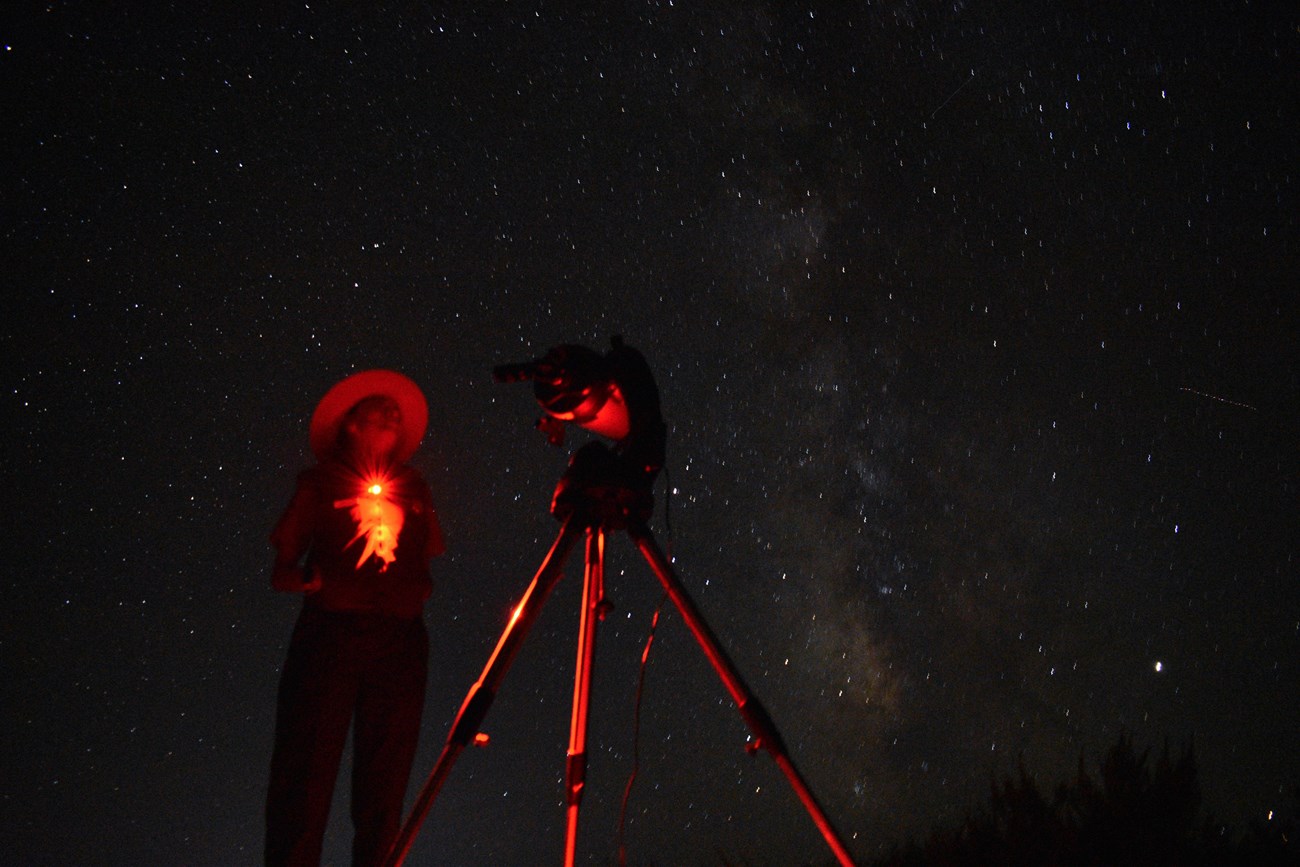
Great Sand Dunes gives one of the simplest Colorado reminders: “Even in summer months, temperatures drop at night.” NPS also recommends water, snacks, warm layers and minimizing unnecessary light during a night-sky visit.[2]
Core kit
- Warm layers that can be added after sunset.[3]
- Hat and gloves when elevation or forecast warrants them.[3]
- Water and food appropriate to the length of the trip.[3]
- A chair or insulated sitting layer for a long session.[3]
- A dim red headlamp plus a normal emergency light.[3]
- Downloaded map, parking location and current access information.[3]
- Phone battery pack or other backup power.[3]
- Footwear suited to the actual ground and weather.[3]
NPS includes illumination, insulation, nutrition, hydration and navigation among its Ten Essentials and recommends adapting the list to the specific trip.[3]
Keep white light for safety, not routine use
Great Sand Dunes says “Use only a red light if needed” while stargazing, but it also tells visitors to carry a flashlight for safe travel on rough ground. Dim red light is for preserving night vision; normal white light remains appropriate when safety requires it.[4]
Astronomy kit
- Binoculars.[5]
- Star chart or astronomy app downloaded before leaving service.[5]
- Telescope and mount only when the destination has a suitable setup area.[5]
- Lens caps and basic dust protection.[5]
- Spare batteries for mounts, cameras and heaters.[5]
- A low-power eyepiece or finder for locating targets.[5]
The Planetary Society notes that “You don’t need a telescope to stargaze.” Binoculars and the unaided eye are enough for a first night and remain useful even after a telescope is added.[5]
If you are building this kit for a self-guided night and do not own the optics yet, check the Colorado library guide for loaner telescopes, binoculars, dark-sky kits and State Parks backpacks.[5]
Plan for weak or absent cell service
NPS recommends downloading maps for offline use and carrying navigation that does not depend on a live mobile connection. Screenshot gate codes, permits, reservations and the managing agency's current access notice before leaving town.[6]
High-elevation weather belongs in the kit
Great Sand Dunes' 8,200-foot valley floor illustrates Colorado's temperature swings: summer nights can fall into the 40s and shoulder-season nights can be much colder. Afternoon thunderstorms and lightning are also common in summer.[7]
Pack for the nighttime forecast, not the temperature when you leave the car.[7]
Before leaving pavement
Confirm legal nighttime access, parking, road conditions, facilities, cell expectations, weather, smoke, Moon timing and any campground or permit requirement. NPS recommends checking current conditions immediately before a trip because closures and hazards can change.[8]
Keep the minimum kit simple
For a low-equipment night, warm layers, water, a dim red light, a chair and binoculars cover most of what beginners actually use. Add equipment when it improves the experience rather than because astronomy is supposed to require a complicated setup.[9]
AstroTours.org makes the same point in its beginner material: start with the sky and keep the first experience uncomplicated.[9]
Sources
- [1]
Photo: National Park Service / Martin Tow, nighttime stargazing photograph — nps.gov/articles/find-your-park-after-dark.htm
- [2]
National Park Service, Great Sand Dunes, Experience the Night — nps.gov/grsa/planyourvisit/experiencethenight.htm
- [3]
National Park Service, Ten Essentials — nps.gov/articles/10essentials.htm
- [4]
National Park Service, Great Sand Dunes, Experience the Night — nps.gov/grsa/planyourvisit/experiencethenight.htm
- [5]
The Planetary Society, A Beginner's Guide to Stargazing — planetary.org/articles/a-beginners-guide-to-stargazing
- [6]
National Park Service, Trip Planning Guide — nps.gov/subjects/healthandsafety/trip-planning-guide.htm
- [7]
National Park Service, Great Sand Dunes, Weather — nps.gov/grsa/planyourvisit/weather.htm
- [8]
National Park Service, Trip Planning Guide — nps.gov/subjects/healthandsafety/trip-planning-guide.htm
- [9]
AstroTours.org, Blog — astrotours.org/blog