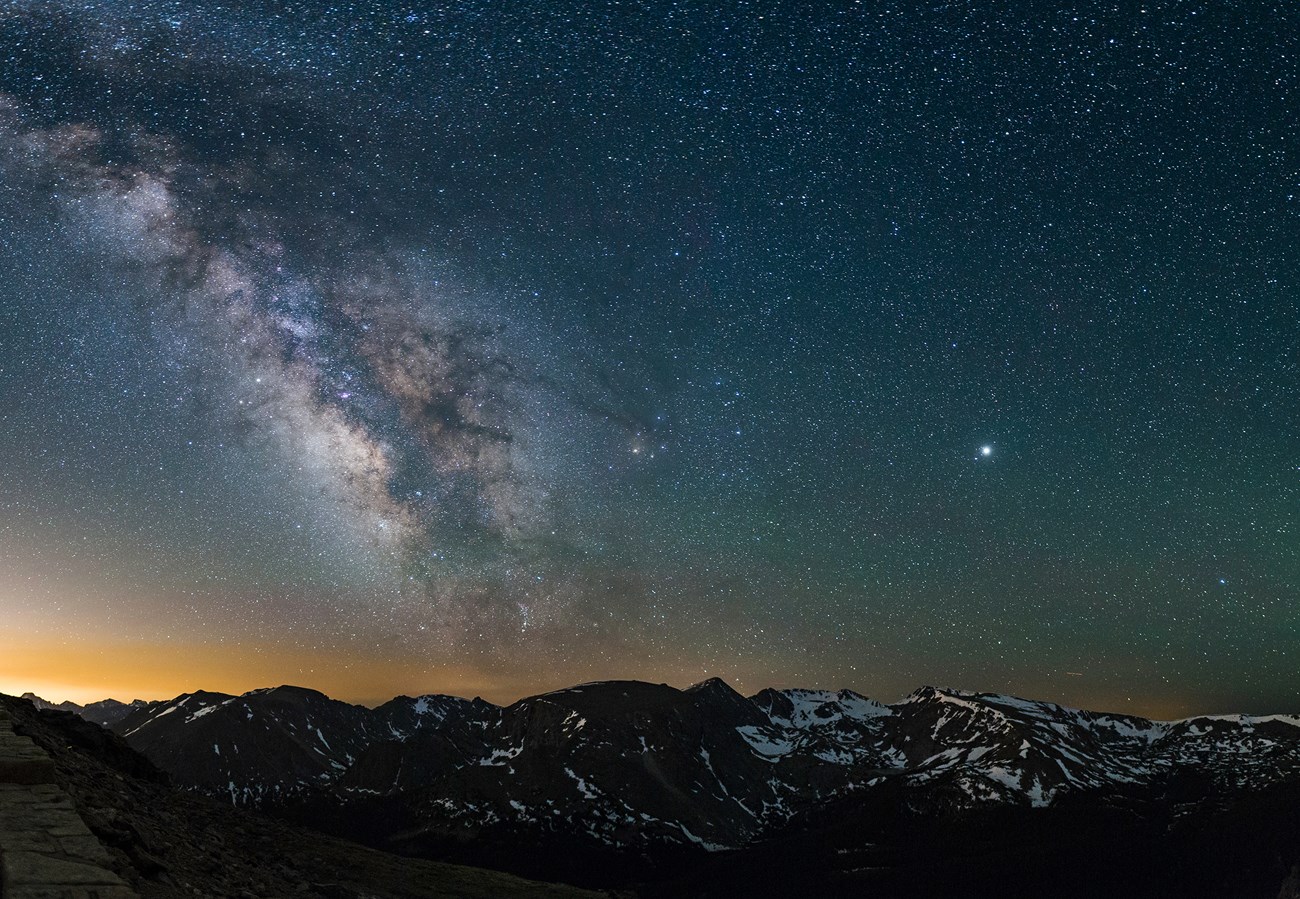
AstroTours.org's winter observing guide emphasizes the practical advantage of early darkness: winter skywatching can begin much earlier in the evening than a midsummer session. It also recommends warm layers, a chair or blanket and dim red light.[2]
Start with Orion and the bright winter patterns
Orion, Taurus, Gemini, the Pleiades and bright Sirius provide easy landmarks for beginners. Sky & Telescope recommends learning a few obvious constellations and asterisms first, then using them as anchors to move around the rest of the sky.[3]
Orion's sword is a strong first telescope target
Astronomy.com recommends beginning telescope observing with bright, easy objects rather than faint targets. The Orion Nebula is one of the classic winter examples: visible as a fuzzy patch under good conditions, stronger in binoculars and richly structured through a telescope.[4]
The Pleiades favor a wide field
Astronomy.com describes binoculars as useful for large open clusters and broad star fields. The Pleiades cover enough sky that binoculars often show the cluster's overall shape more comfortably than a high-magnification telescope.[5]
Dress for standing still
Great Sand Dunes' high-elevation weather page illustrates how quickly Colorado temperatures can fall after sunset. NPS recommends layered clothing for nighttime visits and notes that cold conditions become much more severe outside summer.[6]
For stargazing, pack for sitting or standing with little physical activity rather than for the temperature you felt while hiking in daylight.[6]
Roads outrank darkness
NPS trip-planning guidance says to check current conditions and closures before travel. In winter, a plowed legal site closer to town can be a better observing choice than a darker high-country road with uncertain snow or ice conditions.[7]
Snow changes the observing environment
Bright snow reflects Moonlight and artificial light back into the scene. That can reduce dark adaptation while also producing striking moonlit landscapes and making some terrain easier to see.[8]
DarkSky's lighting principles are particularly useful around snowy lodging and campgrounds: keep outdoor light targeted, low-level and no brighter than necessary.[8]
Batteries and frost need extra margin
Cold nights increase the importance of spare batteries and keeping equipment dry. NPS includes illumination and extra clothing among its Ten Essentials; for powered astronomy equipment, add enough battery margin that a mount, camera or heater does not become the weak point of the trip.[9]
Keep white light available for safety
NPS recommends dim red lights for night vision but still tells night visitors to carry reliable illumination. Use red light for charts and routine setup; use the brighter safety light when terrain, wildlife, a road or an emergency requires it.[10]
A simple winter night
Choose a clear evening with confirmed road access. Bring binoculars, warm layers, insulated footwear, a chair and a dim red light. Find Orion, move to Taurus and the Pleiades, then give the sky time to become familiar before adding more equipment.[11]
Sources
- [1]
Photo: National Park Service / Jeremy White, Protecting Tranquility in a Bright, Noisy World — nps.gov/articles/000/protecting-tranquility-in-a-bright…
- [2]
AstroTours.org, Winter Stargazing in Boulder: Clear Nights & Early Evenings — astrotours.org/post/winter-stargazing-in-boulder-clear-…
- [3]
Sky & Telescope, Stargazing Basics — skyandtelescope.org/astronomy-resources/stargazing-basics
- [4]
Astronomy.com, Using a Telescope — astronomy.com/observing/using-a-telescope
- [5]
Astronomy.com, Using Binoculars — astronomy.com/observing/using-binoculars
- [6]
National Park Service, Great Sand Dunes, Weather — nps.gov/grsa/planyourvisit/weather.htm
- [7]
National Park Service, Trip Planning Guide — nps.gov/subjects/healthandsafety/trip-planning-guide.htm
- [8]
DarkSky International, Five Principles for Responsible Outdoor Lighting — darksky.org/resources/guides-and-how-tos/lighting-princ…
- [9]
National Park Service, Ten Essentials — nps.gov/articles/10essentials.htm
- [10]
National Park Service, Where to Stargaze — nps.gov/subjects/nightskies/stargaze.htm
- [11]
AstroTours.org, Winter Stargazing in Boulder: Clear Nights & Early Evenings — astrotours.org/post/winter-stargazing-in-boulder-clear-…