NPS trip-planning guidance says to check current conditions, closures and hazards before travel. For a stargazing trip, remember that the same road must usually be driven again after dark and after several hours outside.[2]
Standard vehicle
Use this when the normal approach to the recommended observing area is suitable for an ordinary passenger vehicle under normal open-road conditions. Snow, ice, flooding, construction and temporary closures can still change the answer.[3]
High clearance / 4WD
Use these labels only when current land-manager information or the character of the documented approach supports them. Four-wheel drive is not a substitute for checking road conditions, and a rental-car badge does not guarantee clearance or recovery from snow, mud or washouts.[4]
Conditions vary
Colorado mountain and backcountry roads can change with season and weather, so some approaches cannot honestly be reduced to one permanent vehicle label. In those cases the guide says to check the road close to departure.[5]
Great Sand Dunes' weather guidance is a useful statewide reminder: high-elevation Colorado can bring rapid temperature changes, storms and winter conditions even when the destination itself is open.[5]
The return drive matters
NPS after-dark guidance recommends a complete trip plan, current weather check, reliable lighting and telling someone the intended return time. Those basics matter more after a late observing session when wildlife, fatigue, snow or missing cell service complicate the drive.[6]
Do not optimize only for darkness
The official Colorado Stargazing Trail is a statewide starting point, not a promise that every approach fits every vehicle in every season. A slightly brighter destination with a safe, familiar road can produce a better night than a darker site whose exit plan is uncertain.[7]
Sources
- [1]
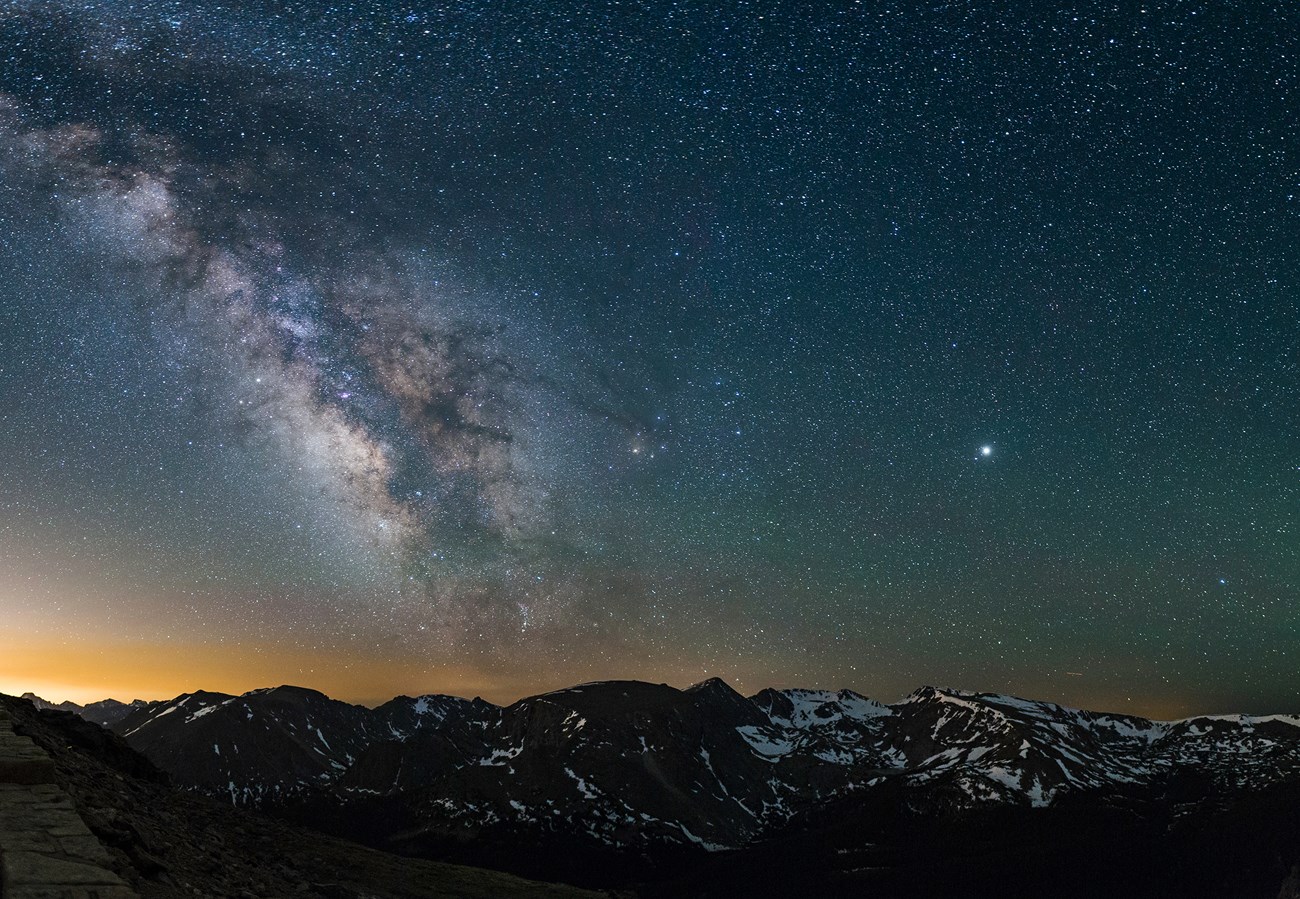
Photo: National Park Service / Jeremy White, Protecting Tranquility in a Bright, Noisy World — nps.gov/articles/000/protecting-tranquility-in-a-bright…
- [2]
National Park Service, Trip Planning Guide — nps.gov/subjects/healthandsafety/trip-planning-guide.htm
- [3]
National Park Service, Current Conditions planning guidance — nps.gov/planyourvisit/alerts.htm
- [4]
Bureau of Land Management, Know Before You Go — blm.gov/programs/recreation/know-before-you-go
- [5]
National Park Service, Great Sand Dunes, Weather — nps.gov/grsa/planyourvisit/weather.htm
- [6]
National Park Service, Find Your Park After Dark — nps.gov/articles/find-your-park-after-dark.htm
- [7]
Colorado Tourism Office, Colorado Stargazing Trail™ — colorado.com/colorado-stargazing-trail