The National Park Service is explicit: “Your cell phone is not a substitute for any of the 10 essentials.” Coverage can disappear, batteries can die and navigation apps can become unavailable exactly when a remote trip becomes difficult.[2]
Service likely
Use this label when usable mobile coverage is reasonably likely around the developed portion of the stop. It is still not a carrier guarantee. Mountains, canyons and distance from towers can change reception over a short distance.[3]
Download the information you would need to leave safely even when a stop is marked service likely.[3]
Limited / unreliable
Use this when a signal may exist but should not be expected for navigation, reservations, weather pages or emergency communication. NPS recommends downloading maps for offline use before entering areas where reception may be absent.[4]
No reliable service
Plan as though the phone will not work. Save the exact parking location, route, gate information and any permit or reservation details before leaving coverage. Carry a backup map where the route warrants it.[5]
Tell someone where the night is happening
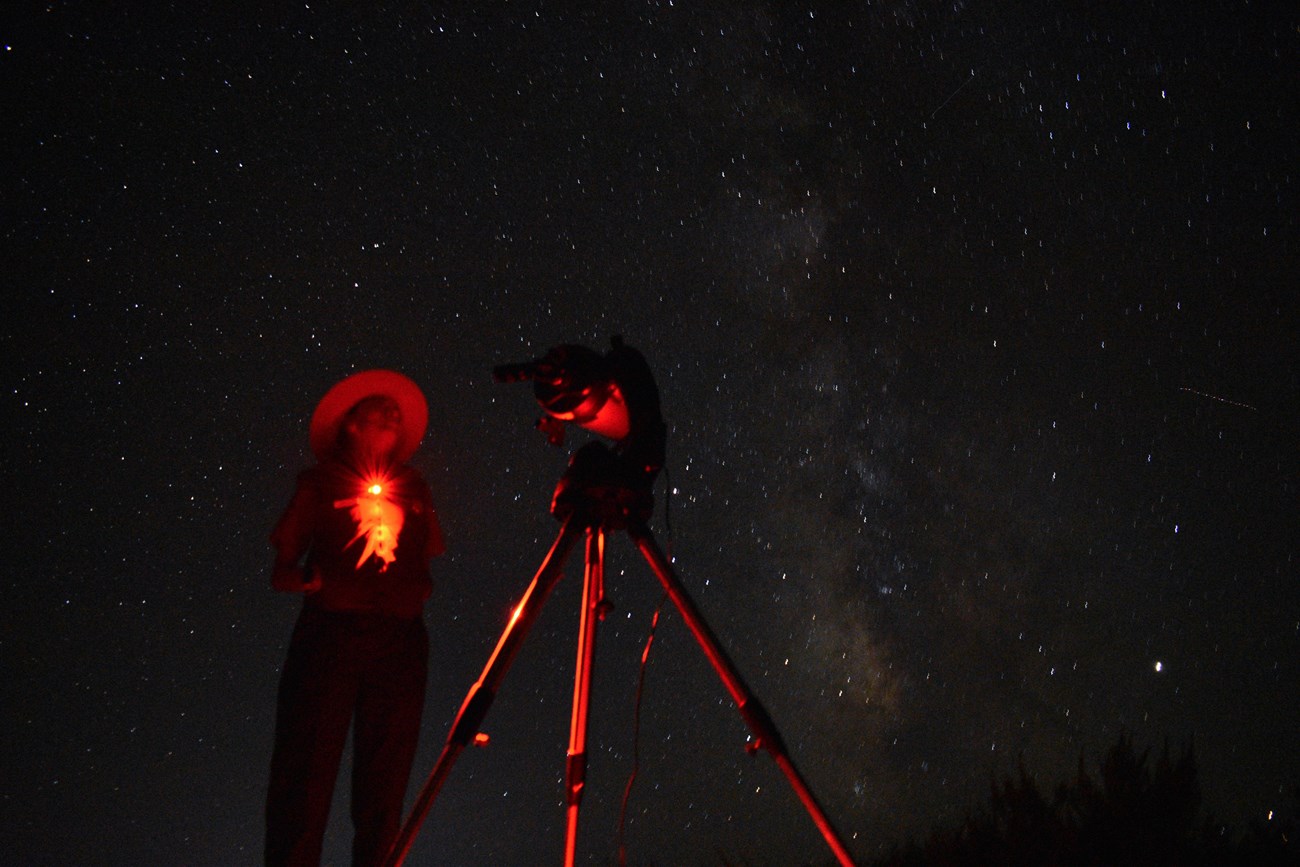
NPS after-dark guidance recommends sharing the destination, plan and expected return time with someone who is not on the trip. That is particularly useful for stargazing because the drive home often begins late, after hours outside and well after staffed facilities close.[6]
Save battery for what matters
Great Sand Dunes recommends carrying a flashlight for safety while minimizing unnecessary light, and specifically warns against depending on a phone flashlight because it can consume battery power. Use a dedicated light and keep the phone available for communication and navigation.[7]
Before leaving service
Save offline maps, screenshot the current access page, note the return route, check weather and closures, and carry enough fuel and power for the return. The darker the destination becomes, the less useful it is to assume a live connection will solve a planning problem later.[8]
Sources
- [1]
Photo: National Park Service / Martin Tow, Find Your Park After Dark — nps.gov/articles/find-your-park-after-dark.htm
- [2]
National Park Service, Trip Planning Guide — nps.gov/subjects/healthandsafety/trip-planning-guide.htm
- [3]
National Park Service, Trip Planning Guide — nps.gov/subjects/healthandsafety/trip-planning-guide.htm
- [4]
National Park Service, Trip Planning Guide — nps.gov/subjects/healthandsafety/trip-planning-guide.htm
- [5]
National Park Service, Ten Essentials — nps.gov/articles/10essentials.htm
- [6]
National Park Service, Find Your Park After Dark — nps.gov/articles/find-your-park-after-dark.htm
- [7]
National Park Service, Great Sand Dunes, Experience the Night — nps.gov/grsa/planyourvisit/experiencethenight.htm
- [8]
National Park Service, Trip Planning Guide — nps.gov/subjects/healthandsafety/trip-planning-guide.htm